When selecting a cooking plate for a commercial griddle, flat-top grill, or teppanyaki station, stainless steel is often preferred for the cooking surface because of its durability, corrosion resistance, and ease of cleaning. However, stainless steel alone has one important limitation: it does not spread heat as efficiently as highly conductive metals such as aluminum.
This is why aluminum is often used as the core layer in multi-layer stainless steel cooking materials.
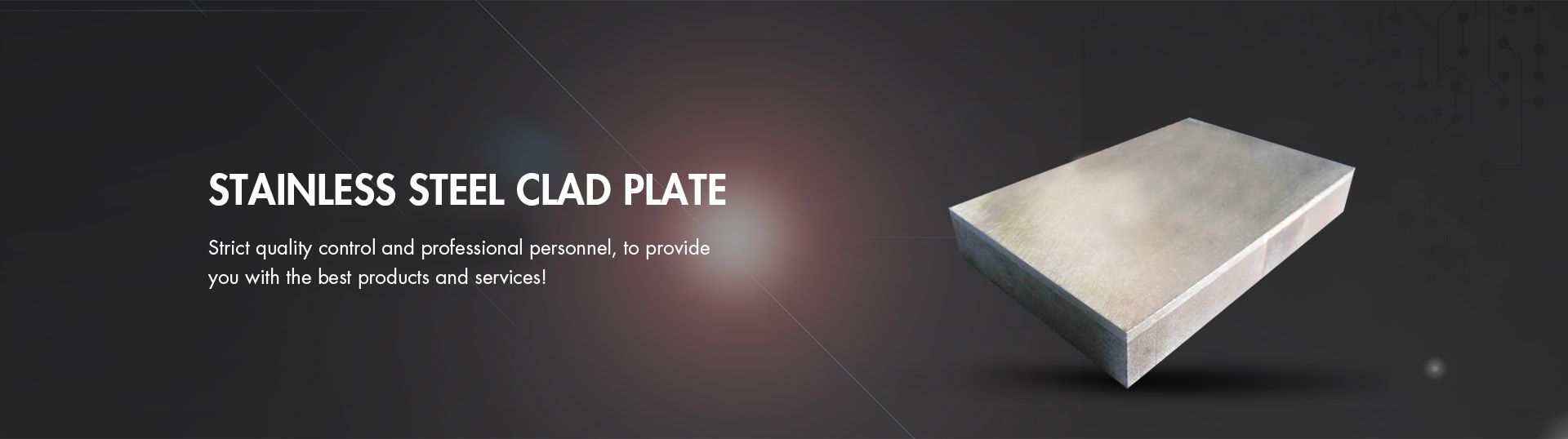
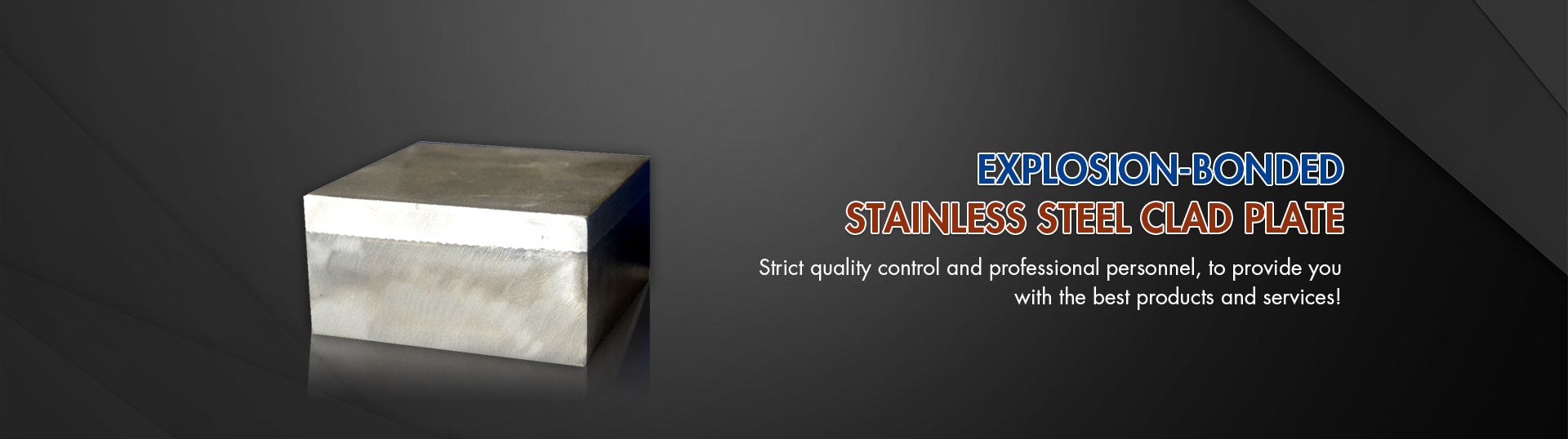
By bonding stainless steel and aluminum into one composite plate, manufacturers can combine the surface properties of stainless steel with the heat-spreading capability of aluminum. This principle is widely used in tri-ply cookware, but it can also be applied to larger cooking surfaces where temperature uniformity is critical.
For commercial cooking equipment manufacturers, an SS-Al-SS stainless steel aluminum clad plate can therefore provide an alternative to conventional solid stainless steel cooking plates.
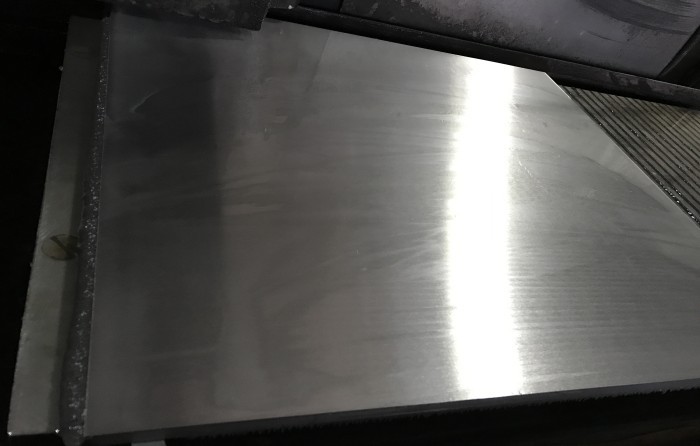
Stainless steel offers several properties that make it attractive for commercial cooking equipment. It is mechanically strong, corrosion resistant, durable under repeated cleaning, and suitable for creating a clean cooking surface.
Its thermal behavior, however, is different from aluminum.
When heat is applied beneath a solid stainless steel plate, the area directly above the burner or electric heating element can become hotter than areas farther away from the heat source. The larger the cooking surface becomes, the more important lateral heat distribution can be.
This can create several practical challenges:
· Hotter zones directly above heating elements
· Cooler areas toward the edges of a large cooking plate
· Less consistent browning across the cooking surface
· Longer temperature recovery in some areas
· Greater dependence on burner or heating-element arrangement
High-ranking explanations of tri-ply stainless steel construction consistently identify this as one of the primary reasons aluminum is placed between stainless steel layers: the aluminum core distributes heat across the cooking surface more efficiently than stainless steel alone.
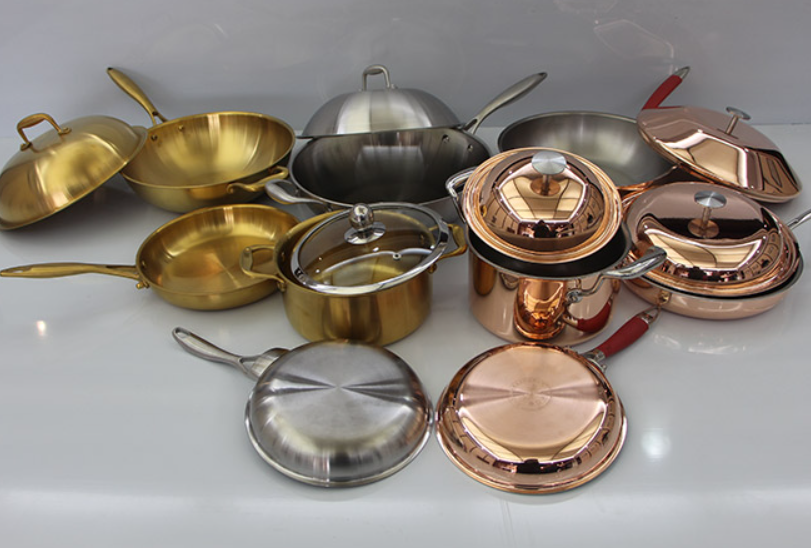
The main purpose of the aluminum core is heat spreading.
Instead of allowing heat to remain concentrated immediately above a burner or heating element, the aluminum layer helps transfer thermal energy laterally through the plate.
In a typical three-layer structure, each material performs a different job:
Layer | Typical Material | Main Function |
Cooking surface | Stainless steel | Corrosion-resistant, durable, easy-to-clean cooking surface |
Core | Aluminum | Rapid lateral heat transfer and temperature distribution |
Backing layer | Stainless steel | Structural support and compatibility with the equipment design |
The three metals are bonded together so that they function as an integrated composite material rather than three separately stacked sheets.
This combination allows equipment designers to use stainless steel where surface durability matters while placing a more thermally conductive material inside the plate.
Imagine a commercial electric griddle with several heating elements installed underneath a wide cooking plate.
Without an efficient heat-spreading layer, the surface areas immediately above each heating element may become significantly hotter than the spaces between them.
An aluminum core acts as a thermal distribution layer. As heat enters the plate, aluminum helps move part of that heat outward from the concentrated source.
The result can be a more balanced surface-temperature profile.
That matters when a griddle is simultaneously cooking burgers, steaks, seafood, vegetables, eggs, pancakes, or other foods across a large working area. More uniform temperatures make it easier for the equipment manufacturer to design predictable cooking zones and for the operator to achieve repeatable cooking results.
However, an aluminum core does not automatically guarantee perfectly uniform temperature. Core thickness, layer ratio, plate dimensions, bonding quality, heater spacing, burner configuration, temperature controls, and structural design all influence final thermal performance. This distinction is also emphasized in technical explanations of aluminum-core stainless construction.
If aluminum transfers heat so effectively, why not simply make the entire griddle plate from aluminum?
The answer is that cooking-surface design involves more than thermal conductivity.
Stainless steel contributes properties that aluminum alone may not provide in the same way, including:
· Better resistance to scratching and repeated scraping
· Strong corrosion resistance
· A durable exposed cooking surface
· Easier integration into stainless commercial kitchen equipment
· Resistance to many common food and cleaning environments
· Long-term surface durability under commercial use
The purpose of a clad structure is therefore not to determine which single metal is “best.” It is to allow different metals to perform the functions for which they are best suited.
The stainless steel provides the functional surface, while the aluminum works internally as the heat-distribution layer.
This same material-engineering principle is why tri-ply stainless steel construction is widely used in professional cookware.
Heat distribution becomes increasingly important as the cooking area becomes larger.
A small pan only needs to spread heat across a relatively limited diameter. A commercial flat-top griddle may have a much larger working area and multiple independent heat sources underneath the plate.
For equipment manufacturers, temperature variation across that surface can affect:
More balanced heat distribution helps reduce major differences between the center of a heating zone and surrounding areas.
Commercial griddles repeatedly experience temperature drops when cold or frozen food is placed on the cooking surface. The thermal design of the plate influences how heat moves back toward the affected area.
Gas burners and electric heating elements introduce heat at specific locations. A conductive core can help distribute this energy across a wider section of the plate.
For OEM manufacturers, the cooking plate is part of the thermal system. Plate material, total thickness, core ratio, heater output, controls, and support structure should therefore be considered together rather than independently.
This is why the correct clad plate specification should normally be selected according to the finished equipment rather than simply choosing a standard three-layer sheet.
Not every commercial griddle requires the same composite structure.
An aluminum-core SS-Al-SS plate generally emphasizes rapid heat spreading and temperature uniformity. A stainless-clad carbon steel plate provides a different balance of thermal mass, structural strength, weight, and magnetic behavior.
Requirement | SS-Al-SS Clad Plate | Stainless-Clad Carbon Steel |
Rapid lateral heat spreading | Strong advantage | Moderate |
Temperature uniformity | Strong advantage | Good, depending on design |
Thermal mass | Depends on thickness | Typically higher in heavy plates |
Overall weight | Relatively lower | Relatively higher |
Stainless cooking surface | Yes | Yes |
Magnetic heating | Depends on backing material | Carbon-steel base is magnetic |
Typical focus | Fast, even heating | Heavy-duty teppanyaki applications |
For manufacturers designing heavier teppanyaki equipment where structural strength, plate mass, and magnetic heating are priorities, KLS also supplies a 304 stainless steel clad carbon steel teppanyaki plate.
The choice should therefore be based on the heating system and equipment performance requirements rather than assuming that one construction is universally better.
Yes.
Two products may both be described as “3-ply stainless steel,” yet their thermal behavior can differ considerably.
Factors include:
· Aluminum-core thickness
· Stainless steel layer thickness
· Total plate thickness
· Stainless-to-aluminum layer ratio
· Aluminum grade
· Bonding quality
· Plate width and length
· Heating method
· Required operating temperature
A thicker aluminum layer can generally provide greater heat-spreading capacity and thermal mass, but it can also change plate weight, fabrication behavior, cost, and heating response.
For this reason, commercial equipment manufacturers should evaluate the complete layer configuration instead of purchasing material based only on the term “3-ply.”
KLS supplies different multi-layer clad materials for cookware and cooking equipment, allowing layer structures and specifications to be selected according to the application.
Before requesting a quotation for stainless steel aluminum clad plate, equipment manufacturers should ideally provide several key details:
· Finished griddle plate dimensions
· Required total thickness
· Preferred stainless steel grade
· Aluminum-core requirement
· Individual layer thickness or layer ratio
· Gas, electric, radiant, or other heating method
· Required surface finish
· Flat plate or cut-to-size blank requirement
· Fabrication requirements
· Expected operating conditions
· Required order quantity
These details allow the material supplier to evaluate whether the proposed SS-Al-SS structure is suitable for the finished equipment.
Aluminum is used as the core of stainless steel clad griddle plates because each material contributes a different performance advantage.
Stainless steel provides the durable, corrosion-resistant cooking surface required for frequent commercial use. Aluminum provides the highly conductive internal layer needed to spread heat more efficiently across the plate.
When properly designed, an SS-Al-SS clad structure can help reduce localized hot spots, improve temperature distribution, and create a more consistent cooking surface for commercial griddles, flat-top grills, and teppanyaki equipment.
For equipment OEMs, however, the most important question is not simply whether a plate contains aluminum. The aluminum-core thickness, stainless steel grades, layer ratio, total plate thickness, heating system, and bonding quality must work together as one thermal design.
Selecting the correct clad structure at the raw-material stage can therefore have a direct impact on the performance of the finished commercial cooking equipment.