Home  >  Industry News

Understanding Stainless Steel Coil: Grades, Specifications, and Buying Considerations

May. 18, 2026

When it comes to metalforming, stainless steel strip coil stands out for its exceptional strength, versatility, and formability. But for engineers and procurement teams sourcing material for precision stamped or deep-drawn components, one fact remains clear: not all stainless steel coil performs the same.


At KLS, we understand that reliable part performance begins with the quality of the coil itself. And true coil quality comes from understanding the details — from material composition and production consistency to how well the coil matches your tooling, press setup, and forming process.


That’s why selecting the right stainless steel grade is more than a purchasing decision. The right material can improve forming efficiency, reduce production issues, extend tool life, and ensure consistent part quality. To help simplify the selection process, let’s take a closer look at the most commonly used stainless steel strip coil grades and how to choose the best option for your application.
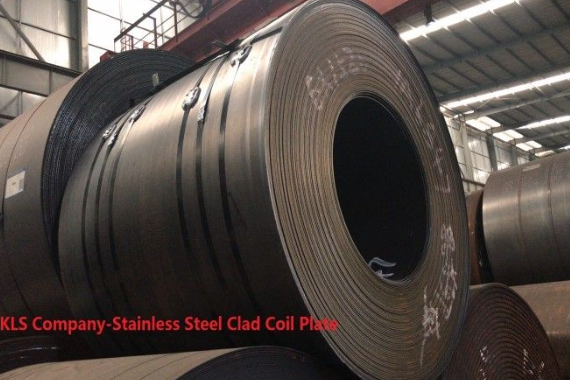

image.png


Choosing the Right Stainless Steel Grade Starts with Understanding the Application


The term “stainless steel coil” may sound straightforward, but it actually covers a wide range of metallurgical grades—each designed with different alloy compositions, processing characteristics, and performance capabilities. In metal forming applications, selecting the right grade means matching the material’s properties to the actual forming requirements of the part.


Rather than choosing a material first, the best approach is to evaluate the demands of the application itself. Factors such as draw depth, springback control, surface finish expectations, corrosion resistance, and forming complexity all play an important role in determining the most suitable stainless steel grade and temper.


Below is an overview of the most commonly used stainless steel grades in stamping, deep drawing, and hydroforming applications, along with the performance tradeoffs and key considerations associated with each option.


304 / 304L: The Forming Workhorse

Often referred to as the “18-8” stainless steel (18% chromium, 8% nickel), 304 stainless steel is one of the most widely used grades for applications requiring a strong balance of formability and corrosion resistance. It is particularly well-suited for moderate to complex forming operations, including medium-depth drawing and parts with compound geometries.

304L, the low-carbon version of 304, is specifically designed to reduce carbide precipitation during welding. This makes it especially valuable for deep-drawn components that later require welding or assembly, where maintaining corrosion resistance at welded zones is critical.


When to choose it:

  • ·   You are deep drawing products such as kitchen sinks or commercial exhaust components

  • ·   You need stable, repeatable performance across multiple dies and press setups

  • ·   You require good weldability and corrosion resistance, but not maximum strength


316 / 316L: Enhanced Corrosion Resistance

316 stainless steel builds on the foundation of 304 by adding molybdenum, significantly improving resistance to chlorides and harsh chemical environments. This makes it a preferred choice for marine, medical, chemical processing, and other aggressive service conditions where corrosion performance is critical.

The tradeoff is higher material cost and a higher work-hardening rate, which may require adjustments in forming force, tooling clearance, and process control to maintain stable production.


When to choose it:

  • ·   You are forming components for marine environments, coastal infrastructure, surgical tools, or laboratory equipment

  • ·   Chloride resistance and long-term corrosion protection are critical requirements

  • ·   You need reliable performance in low-temperature or cryogenic applications


430: A Cost-Conscious Option for Moderate Forming

As a ferritic stainless steel, 430 contains no nickel, which helps reduce material cost while also providing good surface finish quality and inherent magnetic properties. However, compared with austenitic grades, it offers lower ductility and corrosion resistance, making it better suited for simpler forming operations rather than deep or highly complex draws.

It is commonly selected where appearance, cost efficiency, and basic corrosion resistance are more important than extreme formability.


When to choose it:

  • ·   Your part design involves shallow forming or low elongation requirements

  • ·   Appearance and magnetic properties are important (e.g., appliance trim, decorative panels)

  • ·   You need a cost-effective stainless solution without demanding forming complexity


201 / 201LN: Strength and Value in One

The 201 series achieves a more cost-efficient composition by partially replacing nickel with manganese, allowing it to maintain relatively good strength and corrosion resistance at a lower price point compared to 304. However, this chemistry also leads to higher work-hardening rates, which can make forming more challenging without proper process control.

It is often used in high-volume production environments where cost optimization and mechanical strength are both key priorities.


When to choose it:

  • ·   You are producing transit panels, cookware, or decorative components

  • ·   Dent resistance and strength are as important as formability

  • ·   You are running progressive die or high-volume stamping operations with controlled forming parameters


17-7PH: Spring-Tempered Performance

17-7PH is a precipitation-hardening stainless steel designed for applications requiring high strength, fatigue resistance, and reliable elastic behavior. Through controlled heat treatment and cold working, it can achieve excellent dimensional stability and spring performance under repeated loading.

Unlike standard austenitic grades, it is engineered specifically for functional components where “spring memory” and long-term load retention are critical.


When to choose it:

  • ·   You are manufacturing components that must flex repeatedly or store elastic energy (e.g., springs, clips)

  • ·   Dimensional stability and controlled springback are critical performance factors

  • ·   You require strength levels beyond what conventional 300-series stainless steels can provide


From Slab to Strip: How Stainless Steel Coil Is Manufactured


Before stainless steel becomes a coil, it starts as a heavy, solid slab of raw metal—far removed from the precision material used in modern forming operations. Through a carefully controlled sequence of thermomechanical processes, that slab is transformed into a highly engineered strip coil designed for consistency, strength, and forming performance.


However, not all stainless steel coils follow the same production path. Variations in processing routes, rolling methods, and heat treatment can significantly influence final properties such as ductility, surface quality, residual stress, and dimensional stability—factors that directly impact stamping, deep drawing, and hydroforming performance.


For precision metalforming applications, understanding how a coil is produced is just as important as understanding its grade. The manufacturing route can directly affect tool wear, yield rates, and overall production cost.

Here’s a closer look at how stainless steel coil is manufactured—and why these details matter to your bottom line.


Step 1: Hot Rolling – Creating the Initial Coil of Steel

The process begins at the melt shop, where carefully selected alloying elements—such as chromium, nickel, molybdenum, and manganese—are added to molten steel to produce a specific stainless grade. After solidification into slabs, the material is heated and passed through heavy rolling mills at temperatures above 1700°F, reducing thickness and elongating it into a continuous strip.

This stage produces a hot-rolled coil, typically characterized by a rough, oxidized surface and relatively thick gauge (often 0.100" and above). While it is suitable for structural and less demanding applications, it is not yet optimized for precision forming processes.


Step 2: Pickling – Cleaning the Slate

Before cold rolling, the hot-rolled coil undergoes pickling, a chemical treatment (commonly using nitric and hydrofluoric acids) that removes surface scale formed during high-temperature processing. This step restores a clean metal surface and prepares the material for further refinement.

Some mills may offer hot-rolled, pickled, and oiled (HRPO) coil at this stage. However, for applications requiring tight tolerances and consistent forming behavior, this is still an intermediate product rather than a finished precision material.


Step 3: Cold Rolling – Where Precision Begins

Cold rolling is performed at room temperature using high-pressure rollers, often in multiple passes. This process reduces thickness further while significantly improving flatness, surface quality, and dimensional control. It also introduces work hardening, which increases strength and consistency across the strip.

Many producers stop at this stage—often followed by annealing—to create standard commercial tempers. However, for demanding stamping, deep drawing, or hydroforming applications, additional refinement is often required to achieve tighter property control and more consistent coil performance.


Step 4: Precision Rerolling – What Separates Good from Great

This is where precision-focused processors like KLS differentiate themselves. Precision rerolling further refines cold-rolled stainless steel by tightening both dimensional tolerances and mechanical property consistency beyond standard mill capabilities.

Using specialized rolling equipment and in-line measurement systems, this process can achieve:

  • ·   Gauge tolerances as tight as ±0.0003" across the full coil

  • ·   Width tolerances as tight as ±0.002", even for narrow strip

  • ·   Custom temper levels, including quarter hard, half hard, three-quarter hard, and full hard

  • ·   Highly consistent surface finishes, ranging from bright annealed (BA) to matte or No. 4

Unlike standard mill reporting methods that rely on sampled measurements, precision rerolling is designed to maintain consistency across the entire coil width and length—ensuring every section of material performs reliably in real production conditions.


Step 5: Annealing, Slitting & Final Finish

Between rolling stages, coils may undergo annealing, a heat treatment process that restores ductility and relieves internal stresses. This balance between softness and strength is especially important for deep drawing applications, where controlled elongation is required without tearing or excessive springback.

Finally, the material is slit and finished to customer specifications. Master coils are cut into narrower widths and re-wound into formats suited for specific applications—whether wide strip for large panel forming or narrow oscillate-wound coils for high-speed progressive stamping lines.


Beyond the Coil: Why Form, Fit, and Tolerance Define Success


When sourcing stainless steel coil, it is easy to focus primarily on price, grade, or delivery time. However, in real manufacturing environments, the material’s form, dimensional consistency, and mechanical behavior often have a far greater impact on production stability and overall cost efficiency.


Even when the alloy grade is correct, a coil that arrives with inconsistent thickness, poor winding stability, or variable yield strength can disrupt forming operations, increase scrap rates, and lead to unexpected downtime. As a result, precision stamping and deep drawing manufacturers are increasingly shifting their focus from simply buying “stainless steel coil” to sourcing coil engineered specifically for their forming conditions.

To understand what this means in practice, it starts with coil form.


Coil Form & Packaging: More Than Just a Preference

The way stainless steel coil is wound, handled, and delivered directly influences line efficiency, operator safety, tool life, and press uptime. Different coil formats are optimized for different production environments.


Pancake Coil (Eye-to-Sky)

Pancake coils, also known as ribbon-wound coils, are one of the most traditional formats in the industry. The strip is wound flat and stacked vertically for handling and storage. This format is straightforward and widely used, particularly in lower-volume or less automated operations.

However, in high-speed production environments, frequent coil changes can significantly reduce overall productivity.


Ideal for:

  • ·   Prototype production or low-volume manufacturing

  • ·   Manual or semi-automated feeding systems

  • ·   Parts with relatively simple geometries and low forming complexity


Oscillate Wound Coil

Oscillate wound coil is designed for continuous production efficiency. Instead of being wound in a flat stack, the strip is side-laid in a controlled oscillating pattern, allowing significantly more material to be packed into a single coil.

This extended length reduces the frequency of coil changes, minimizes press stoppages, and helps maintain consistent production flow. In many high-volume stamping operations, this format can improve overall throughput by reducing non-productive downtime.


Ideal for:

  • ·   High-speed progressive die stamping

  • ·   Long production runs requiring maximum uptime

  • ·   Operations focused on reducing labor and changeover frequency


Traverse Wound Coil

Traverse wound coil is typically used for ultra-narrow strip and fine gauge applications. The material is wound in a controlled back-and-forth motion across the spool, similar to a fishing reel, ensuring smooth feeding and stable handling of delicate materials.

This format is especially valuable when material integrity and feeding precision are critical.


Ideal for:

  • ·   Medical device components and fine wire applications

  • ·   Battery connectors and precision electronic strips

  • ·   Narrow-width sensor, shielding, or micro-component production


Mechanical Tolerances: Strength, Hardness & Elongation You Can Rely On


In stamping and deep drawing, the “feel” of the metal is not subjective—it is governed by tightly defined mechanical properties that determine how the material bends, flows, resists tearing, and springs back under load. These properties must be controlled and consistent, not assumed.

Key mechanical performance indicators include:

  • ·   Yield strength: the stress required to initiate permanent deformation

  • ·   Tensile strength: the maximum stress the material can withstand before fracture

  • ·   Elongation: the ability of the metal to stretch before failure

  • ·   Hardness / temper: an indirect indicator of ductility, strength, and springback behavior


When these properties fluctuate from coil to coil, process stability is lost. One production run may crack prematurely, while another may wrinkle or over-form under the same tooling conditions. In contrast, tightly controlled and process-stabilized strip allows forming behavior to remain predictable and repeatable.


With precision-controlled rerolled strip matched to the specific die design and draw requirements, manufacturers achieve:

  • ·   Consistent press response across production batches

  • ·   Predictable and repeatable springback behavior

  • ·   Fewer first-article failures and setup iterations

  • ·   Higher first-pass yield and overall part quality


All Tolerance Is Cumulative


In real-world forming operations, tolerances do not exist in isolation—they accumulate across every stage of the process. Coil variability combines with die clearance, press repeatability, lubrication conditions, and feed alignment to define final part accuracy.


This means that tighter material control at the coil level directly improves the stability of the entire production system.


Consider this simplified example:

If coil thickness varies by ±0.002", and the die clearance is only 0.004", then half of the available forming tolerance is already consumed before the press even cycles.

However, if coil tolerance is controlled within ±0.0005", the forming window expands significantly, allowing the tooling and process to operate with greater stability, reduced risk, and more consistent output.

In precision stamping and deep draw applications, tighter coil tolerances effectively create “process breathing room,” enabling smoother forming behavior, fewer adjustments, and more reliable part production over long runs.
Contact Us
  • QQ: 2228721936
  • Skype: lingmai-2005
  • Tel.: +86 757 8383 6678
  • Fax: +86 757 8383 8678
  • E-mail: carson@klsfh.com
  • Mob.: +86 158 1691 5404
  • WhatsApp: +86 158 1691 5404
  • Add.: No.30-33, 2/F, Block 5, Lanshi (International) Matel Trade Center, Chancheng District, Foshan City, Guangdong Province, China.
follow us

Cladding Armor Plate Stainless Steel Sheathing Sheet Metal Cladding Armor Metal Jacketing Sheet Stainless Steel Cladding Facade Steel Panel Overlay clad copper steel plate coil industrial copper clad steel plate Copper Composite Panel for Middle East Copper Composite Panel for USA Copper Composite Panel for Japan