Titanium and its alloys, especially commercially pure grades such as Grade 1 and Grade 2, are widely used in highly corrosive industrial environments including chemical processing, seawater desalination, power generation, and heat exchange systems. The reason is simple: titanium offers outstanding resistance to chlorides, acids, and oxidizing media while maintaining excellent strength-to-weight performance.
However, manufacturing entire equipment—such as pressure vessels, tanks, heat exchangers, and piping systems—from solid titanium is extremely expensive. In large-scale industrial applications, material cost often becomes the limiting factor rather than performance requirements. This challenge has led to the development of cost-effective hybrid solutions such as titanium lining and titanium cladding, both designed to maximize corrosion resistance while reducing overall material cost by combining titanium with carbon steel or alloy steel structures.
Although these two technologies may appear similar at first glance, they differ significantly in bonding method, structural strength, manufacturing process, and application scope.
Understanding the Core Concept: Why Hybrid Titanium Structures Exist
Both titanium lining and titanium cladding are based on the same engineering principle: using titanium only where it is needed most—on the surface exposed to corrosive media—while using a cheaper, high-strength base metal (usually carbon steel) to carry mechanical loads.
In both cases, titanium acts as the corrosion-resistant barrier, while the steel substrate provides structural strength, pressure resistance, and fabrication convenience. This hybrid design dramatically reduces cost compared to solid titanium equipment while still maintaining long-term durability in aggressive environments.
According to industrial material engineering references, titanium composite structures are widely used in chemical reactors, seawater systems, and heat exchangers because they balance corrosion resistance and mechanical performance effectively while reducing material consumption significantly.
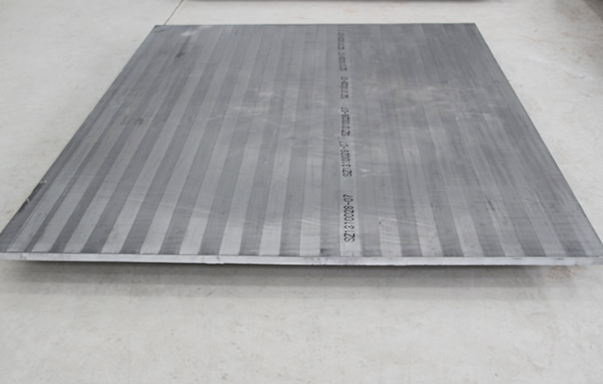
What Is Titanium Cladding?
Titanium cladding refers to a metallurgical bonding process that permanently joins a titanium layer to a base metal such as carbon steel or stainless steel. The key feature of titanium cladding is that the bond is not just physical contact—it is a true metallurgical connection formed at the atomic level.
This is typically achieved through high-energy industrial processes such as:
During explosive or rolling cladding, extreme pressure forces the titanium and steel surfaces into intimate contact, creating a wavy interface and a strong atomic-level bond. This results in a composite material that behaves like a single structural unit.
Because of this strong bonding mechanism, titanium cladding offers:
· Very high shear strength at the interface
· Excellent performance under high pressure and elevated temperature
· High reliability in critical equipment such as pressure vessels and heat exchangers
Industry applications show that titanium-clad steel plates are widely used in chemical plants, offshore systems, desalination units, and oil & gas equipment due to their durability and structural integrity.
In simple terms, titanium cladding is not just a coating—it is a permanently bonded composite material designed for demanding industrial conditions.
What Is Titanium Lining?
Titanium lining, in contrast, refers to a mechanical or semi-loose attachment method where a titanium sheet is applied to the inner surface of a steel structure without forming a strong metallurgical bond.
Instead of atomic-level fusion, titanium lining is usually achieved through:
· Mechanical expansion fitting
· Welding at limited points or seams
· Bolting or anchoring in some designs
· Partial brazing in specific applications
Because the bonding is not continuous or metallurgical, there is typically a small interface gap or limited contact area between the titanium layer and the base metal.
This structural difference means titanium lining is generally:
· Easier and cheaper to manufacture
· Less complex in fabrication and repair
· Suitable for large tanks and low-pressure systems
However, it also has limitations:
· Lower bonding strength compared to cladding
· Not suitable for high-pressure or high-temperature service
· Potential risk of deformation or detachment under severe mechanical stress
In industrial practice, titanium lining is commonly used for low-pressure chemical storage tanks, ventilation systems, and ambient-temperature corrosion protection applications where mechanical loads are not extreme.
Key Differences Between Titanium Cladding and Titanium Lining
The fundamental difference between these two technologies lies in the bonding mechanism and structural integrity.
Titanium cladding forms a metallurgical bond, meaning the titanium and steel behave as one integrated material. Titanium lining relies on mechanical attachment, meaning the titanium layer is more like a protective inner shell rather than a structural component.
Cladding therefore provides significantly higher strength and stability. It can withstand high-pressure environments, thermal cycling, and mechanical stress. Lining, on the other hand, is limited to mild operating conditions where corrosion resistance is required but structural loads are relatively low.
From a performance standpoint, titanium cladding is the preferred choice for critical equipment in petrochemical plants, offshore engineering, and high-performance heat exchangers. Titanium lining is typically selected when cost reduction and ease of fabrication are the priority, especially in large-diameter storage tanks or non-pressurized vessels.
Manufacturing and Engineering Considerations
Titanium cladding requires advanced manufacturing technologies and strict quality control. Processes such as explosive welding create extremely high energy impacts that ensure full surface bonding without melting the base metals. This results in a durable composite structure capable of long-term industrial service.
Titanium lining is significantly simpler to produce. Since it does not require full metallurgical bonding, it can be installed on-site or in simpler fabrication environments. This reduces manufacturing cost and time but also limits its performance envelope.
According to industrial studies on clad metal technology, cladding techniques provide much higher bonding strength and long-term durability compared to lining or coating methods.
Application Scenarios: When to Use Each Technology
Titanium cladding is typically selected for:
· High-pressure chemical reactors
· Heat exchangers and condensers
· Offshore and marine engineering systems
· Oil & gas processing equipment
· Desalination plants and seawater systems
Titanium lining is typically used for:
· Large storage tanks for chemical media
· Low-pressure acid or chloride handling systems
· Ambient-temperature corrosion protection
· Non-critical industrial containers
The selection depends largely on operating conditions, design pressure, maintenance expectations, and budget constraints.
Cost vs Performance Balance
One of the main reasons both technologies exist is the need to balance performance and cost. Titanium is highly corrosion-resistant but expensive and difficult to fabricate. Using it in full structural form is often unnecessary.
By combining titanium with carbon steel, industries can reduce material costs significantly while still achieving long service life. Titanium cladding generally has higher upfront cost than lining, but it offers better lifecycle value due to its durability and reduced maintenance needs.
Titanium lining is cheaper initially but may require more frequent inspection or replacement depending on operating conditions.
Conclusion
Titanium lining and titanium cladding are both engineered solutions designed to extend the use of titanium in industrial systems while controlling cost. However, they serve very different purposes.
Titanium cladding is a high-performance, metallurgically bonded composite material suitable for demanding environments involving pressure, temperature, and mechanical stress. Titanium lining is a more economical, mechanically attached solution suitable for mild operating conditions where corrosion protection is the primary concern.
Choosing between the two depends on understanding the balance between structural requirements, corrosion severity, and budget. In modern industrial engineering, both technologies play an important role in making titanium applications more practical, scalable, and cost-efficient across global industries.