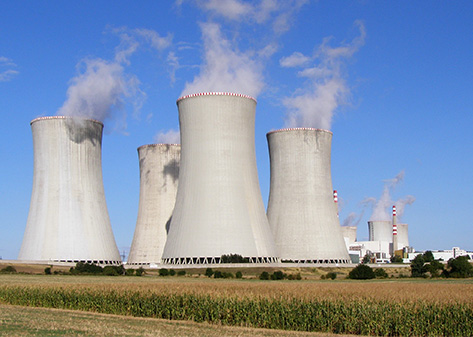
Power Plant Chimney Lining
Application
In recent years, the anti-corrosion lining titanium clad steel plate of the power plant has been widely used, which has the characteristics of high permeability and tightness, strong integrity, light self weight and high corrosion resistance. Titanium clad steel plate is a new composite material made of titanium plate and carbon steel plate by rolling technology. The cost of pure titanium is too high. So the titanium clad steel plate not only has the corrosion resistance of titanium plate and the mechanical properties of carbon steel plate, but also greatly reduces the costs.
Power plant chimney lining plays a critical role in protecting industrial exhaust systems from highly corrosive environments generated during combustion and flue gas treatment. In coal-fired power plants and similar industrial facilities, flue gas often contains sulfur dioxide (SO₂), hydrochloric acid (HCl), moisture, and other aggressive chemical compounds. These elements can cause severe corrosion to conventional steel structures over time.
◆ Continuous exposure to wet and acidic condensate
◆ Chloride and other halide ions in the process stream
◆ Start-up, shutdown and repeated temperature cycling
◆ Local deposits, liquid accumulation and insufficient drainage
◆ Gas-flow erosion and entrained particulate matter
◆ Discontinuities or contamination around field-welded joints
To solve this issue, modern power plants widely adopt advanced corrosion-resistant materials such as titanium clad steel plates for chimney lining systems. This solution is especially effective in Flue Gas Desulfurization (FGD) systems, where acidic condensation and high humidity significantly accelerate material degradation.
Compared with traditional anti-corrosion coatings or rubber linings, titanium clad steel plate offers a more durable and structurally stable solution, making it an increasingly preferred material in industrial chimney protection.
Titanium clad steel plate is a composite material made by bonding a layer of titanium with a carbon steel base plate through advanced rolling or explosive bonding technology. This combination allows the material to retain the excellent corrosion resistance of titanium while benefiting from the mechanical strength and cost efficiency of carbon steel.
The structure typically consists of:
· A corrosion-resistant titanium layer (working surface)
· A strong carbon steel backing layer (structural support)
This dual-metal structure ensures that the material performs effectively under harsh operating conditions while significantly reducing the cost compared to solid titanium construction.
The roll bonding process ensures a metallurgical bond between the two layers, creating high integrity and long-term stability even under high-temperature and corrosive environments commonly found in power plant chimney systems.
In modern Flue Gas Desulfurization (FGD) systems, chimney liners are constantly exposed to acidic condensates, wet gas streams, and temperature fluctuations. Under such conditions, conventional carbon steel or stainless steel may experience rapid corrosion, leading to frequent maintenance and downtime.
Titanium clad steel plate offers several key advantages that make it ideal for power plant chimney lining applications:
Titanium has outstanding resistance to chloride ions, acidic gases, and moisture. When used as a lining material, it effectively prevents chemical attack from flue gas condensation, significantly extending the service life of chimney systems.
Unlike pure titanium structures, which can be expensive and mechanically limited in large-scale applications, titanium clad steel plate combines titanium’s surface protection with carbon steel’s strength. This makes it suitable for large industrial chimneys and heavy-duty structural environments.
One of the biggest advantages of titanium clad steel plate is cost efficiency. By reducing the amount of titanium required, it provides a much more economical solution while maintaining nearly the same corrosion resistance performance in chimney lining systems.
Due to its excellent durability and resistance to chemical corrosion, titanium clad steel plate significantly reduces maintenance frequency and downtime in power plants. This leads to lower long-term operational costs.
| Engineering Requirement | Benefit of Titanium Clad Steel Plate |
|---|---|
| Corrosion protection | The titanium surface provides the corrosion-resistant barrier specified for the process environment. |
| Structural strength | The steel backing carries structural loads and provides the stiffness required for large chimney sections. |
| Material economy | Titanium is used only on the process-contact surface, reducing alloy consumption compared with solid titanium construction. |
| Fabrication | Clad plates can be supplied in project-specific dimensions and fabricated into flat or rolled components. |
| Lifecycle performance | Correctly selected and fabricated metallic cladding can reduce recurring coating repair and unplanned maintenance. |
The metallurgical bond between the titanium layer and steel base provides an integrated plate structure. However, long-term liner performance also depends on joint design, welding procedures, surface cleanliness, drainage and inspection of completed seams.
Flue Gas Desulfurization (FGD) systems are designed to remove sulfur compounds from exhaust gases. However, the process creates a highly aggressive environment inside the chimney system.
Common corrosion challenges include:
· Acidic condensation from sulfuric acid formation
· High humidity combined with temperature cycling
· Chloride-induced pitting corrosion
· Erosion-corrosion from gas flow and particulates
These conditions make material selection extremely important. Without proper protection, chimney linings can degrade quickly, leading to structural failure and high repair costs.
Titanium clad steel plate provides a reliable solution to these challenges due to its superior chemical stability in acidic environments.
Titanium clad steel plate is widely used in various industrial environments where corrosion resistance and mechanical strength are required simultaneously.
Coal combustion produces large amounts of sulfur compounds and acidic gases. Titanium clad steel plate is commonly used as chimney lining material to protect internal structures from corrosion damage.
FGD systems are one of the most important applications for titanium clad steel plate. The material performs exceptionally well in wet scrubber environments where acidic liquids and gases are present.
Industries such as metallurgy, cement production, and chemical processing also generate corrosive exhaust gases. Titanium clad steel plate is used to line chimneys, ducts, and exhaust channels in these facilities.
In chemical processing environments, corrosion resistance is critical. Titanium clad steel plate ensures safe and long-lasting operation of exhaust and ventilation systems.
The production of titanium clad steel plate involves advanced metallurgical bonding techniques to ensure strong adhesion between layers.
The most commonly used methods include:
Titanium and carbon steel plates are heated and rolled under high pressure to form a permanent metallurgical bond. This process ensures uniform bonding strength and excellent surface integrity.
In some cases, explosive energy is used to bond titanium and steel plates at high velocity impact, creating extremely strong interatomic bonding suitable for demanding environments.
After bonding, the material may undergo heat treatment, surface finishing, and quality inspection to ensure compliance with industrial standards.
| Cladding Material | Titanium Grade 1, Grade 2, Grade 7, Grade 12 or project-specified titanium alloy |
|---|---|
| Base Material | Carbon steel or low-alloy steel selected according to structural and fabrication requirements |
| Bonding Method | Explosive bonding, roll bonding or a project-approved combined process |
| Plate Configuration | Customized overall thickness, cladding thickness, width, length and material combination |
| Processing Support | Cutting, forming and surface finishing according to approved drawings and order requirements |
| Reference Standards | ASTM B898 and other ASTM, ASME, EN, JIS or project-specific requirements where applicable |
| Inspection | Dimensional inspection, surface examination, bond integrity testing and agreed mechanical tests |
| Documentation | Material test certificates, inspection reports and traceability documents as specified in the purchase order |
All material grades, dimensions and tests should be confirmed against the chimney designer’s drawings and technical specification. KLS supports customized plate supply for EPC contractors, power plant equipment manufacturers, fabricators and overseas industrial projects.
Different power plants have different operational conditions depending on fuel type, emission control systems, and environmental regulations. Therefore, customized titanium clad steel plate solutions are often required.
Customization options include:
· Plate thickness and titanium layer ratio
· Surface finishing and corrosion protection level
· Large-size plate fabrication for chimney structures
· Engineering design support for FGD systems
OEM and project-based customization ensures that each installation meets specific performance requirements while optimizing cost efficiency.
Selecting the right material for chimney lining directly impacts the efficiency, safety, and operational cost of a power plant.
Titanium clad steel plate stands out because it provides:
· Superior resistance to acidic corrosion
· Excellent mechanical strength for large structures
· Reduced lifecycle cost compared to solid titanium
· Proven performance in FGD and power generation systems
· Long-term reliability with minimal maintenance needs
These advantages make it one of the most reliable solutions for modern industrial chimney protection systems.
Power plant chimney lining systems operate in some of the most corrosive industrial environments. Traditional materials often fail to provide long-term protection under continuous exposure to acidic gases and moisture.
Titanium clad steel plate offers an advanced solution by combining the corrosion resistance of titanium with the strength and affordability of carbon steel. Its widespread use in Flue Gas Desulfurization systems and industrial chimneys demonstrates its reliability and efficiency.
As power plants continue to demand higher efficiency, longer service life, and lower maintenance costs, titanium clad steel plate will remain a key material for modern chimney lining systems.
Wet FGD gas can produce acidic condensate on the chimney liner. The combined effects of moisture, sulfur compounds, halides, temperature cycling and local liquid accumulation can rapidly corrode unprotected carbon steel.
No. Titanium clad steel consists of a corrosion-resistant titanium layer metallurgically bonded to a structural steel backing. It uses less titanium than solid titanium construction while retaining the strength of the steel base.
Commercially pure titanium grades are frequently considered, but the final grade must be selected according to condensate chemistry, temperature, halide concentration, welding requirements and the project corrosion assessment.
KLS can manufacture custom flat or formed clad plate material for new construction and project-designed retrofit applications. The EPC contractor or chimney engineer should determine the structural design, joint configuration and field installation method.
Depending on the purchase specification, the supply package can include material test certificates, dimensional records, bond inspection results, mechanical test reports and traceability documents.
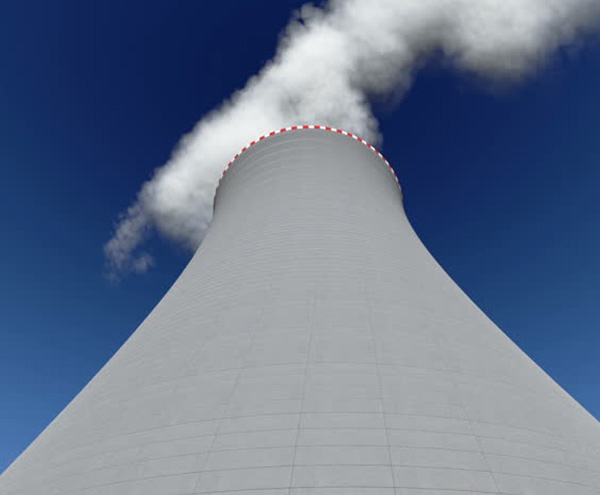
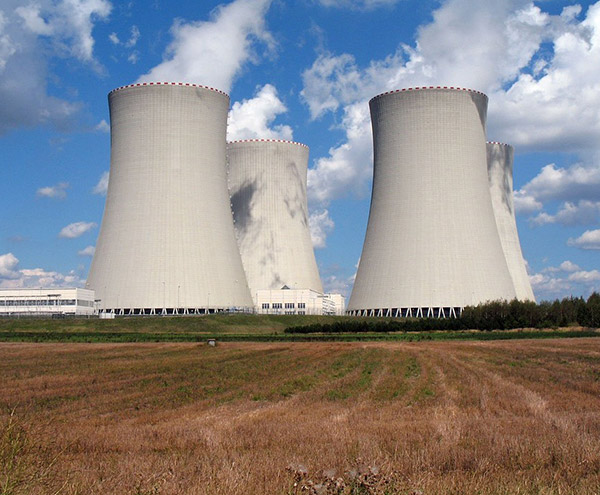
Nuclear-power-plant-chimney-1
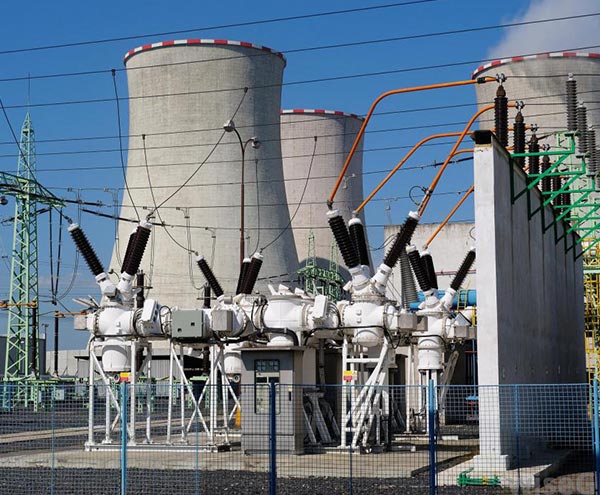
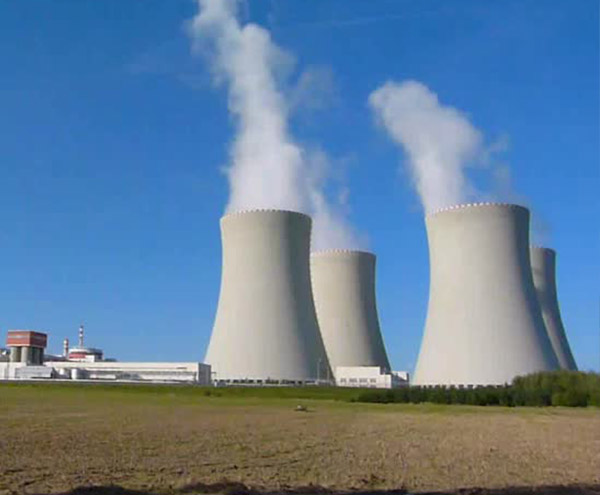
Nuclear-power-plant-chimney-2
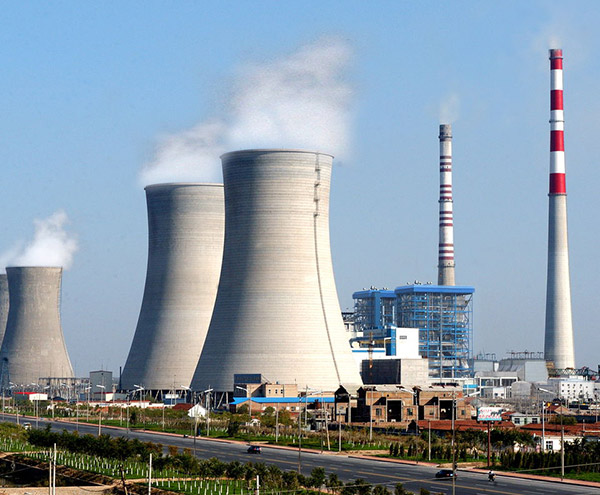
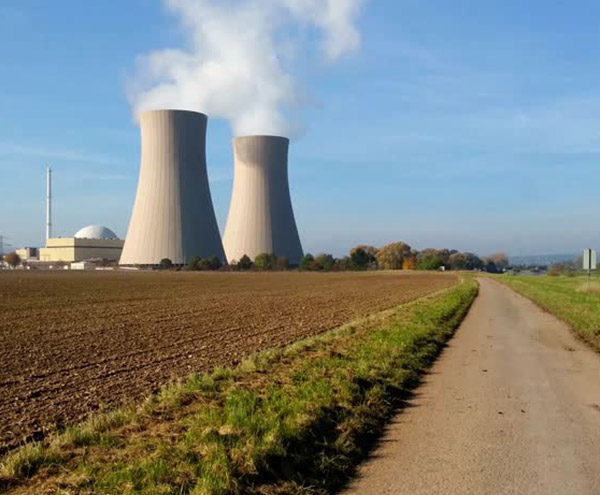
Nuclear-power-plant-chimney-3
Nuclear-power-plant-chimney-4
Nuclear-power-plant-chimney-5
Nuclear-power-plant-chimney-6