Military Field
Application
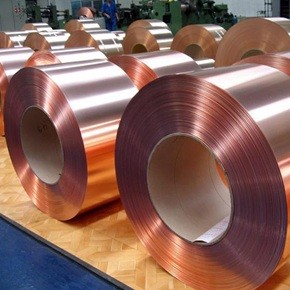
Copper steel composite materials' low-pressure infiltration composite technology is a new technology that has emerged in the domestic metal composite sheet material field. In addition to having the common characteristics of high strength, good heat resistance, thermal stability, plasticity, toughness, and wear resistance, copper clad steel plate also has advantages such as high yield rate and high precision in the military gun shell manufacturing industry. It helps improve the quality of gun shells.
The composite material has excellent consistency, ensuring uniformity between bullets and bullet casings; with large batch size, continuous processing can be achieved, greatly improving production efficiency. The surface quality is comparable to pure copper, and the yellow copper surface of the copper composite panel has lubrication effects, which can reduce the wear on gun barrels and lines when shooting. Now widely used in gun shell and bullet products, as well as other military applications. The sales network for military copper composite material has covered the globe and received consistent praise from many customers.
Specifications available
| Standard Dimensions | Yellow-Copper-Steel-Yellow-Copper | Yellow-Copper-Steel-Yellow-Copper | Yellow-Copper-Steel-Yellow-Copper |
| Strip Width | 139.5 mm | 124/135/137/140 mm | < 600 mm |
| Strip Thickness | 1.7-3.6 mm | 0.5-1.37 mm | 0.05 - 4.0 mm |
| Covering Thickness | 3.4% - 4 % | 3.4% - 4 % | 3 - 15 % |
| Core/Substrate Material | F18 Steel | F11 Steel | SPHC |
| Covering Material | H90 Copper | H90 Copper | H90 |
| Delivery Form | Coils/Strip | Coils/Strip | Coils/Plate |
| Material | Tensile Strength (Mpa) | Elongation (%) | Grain Size | Pearlite | Non-Metallic Inclusions A/B/C/D |
| Fire State | Half-Hard State | Fire State | Half-Hard State | ||
| H90/SPHC/H90 | 290~355 | 360~455 | ≥36% | ≥8% | 7-10 grade |
| H90/F11/H90 | 265~365 | ≥43% | 7-10 grade | 1-5 grade | |
| H90/F18/H90 | 305~395 | ≥37% | 7-10 grade | 2-6 grade |
Looking for a reliable copper steel composite material supplier for military or industrial applications?
We provide high-quality copper clad steel plates designed for ammunition production, bullet shell manufacturing, and precision stamping applications.
Our advantages include:
· Stable and high-quality production
· Custom thickness and specifications
· Support for OEM and large-scale orders
· Competitive factory pricing
· Global export experience
Contact us today to request technical data, samples, or a quotation for your project.
Copper steel composite material is a high-performance bimetallic solution widely used in the military manufacturing industry, especially in bullet shell production, ammunition components, and precision stamping parts. It combines the excellent ductility and surface properties of copper with the high strength and structural stability of carbon steel.
In modern ammunition manufacturing, consistency, precision, and production efficiency are critical. Traditional single-metal materials often fail to meet these requirements in high-speed mass production. Copper clad steel plate provides a balanced solution that improves forming performance while reducing material cost and ensuring stable product quality.
With advanced composite bonding technology, copper steel composite materials are now widely used in military-grade applications where reliability, uniformity, and high-volume production are required.
Copper steel composite material is a metallurgical bonded plate made by combining a copper layer and a steel substrate through advanced rolling or bonding processes. The copper layer provides excellent surface properties, including corrosion resistance, lubrication performance, and forming ability, while the steel base provides strength and rigidity.
This structure allows the material to perform well in demanding manufacturing environments, especially in continuous stamping and forming processes used in ammunition production.
Compared with pure copper materials, copper steel composite significantly reduces cost while maintaining similar surface performance, making it an ideal material for large-scale industrial production.
One of the most important applications of copper steel composite material is in military ammunition manufacturing, particularly in bullet shell and gun shell production.
Copper steel composite plate is widely used for producing bullet shells due to its excellent formability and stable mechanical behavior during high-speed stamping processes. It ensures smooth shaping, reduced cracking risk, and high production efficiency.
In addition to bullet shells, the material is also used in various ammunition parts that require consistent thickness, controlled deformation, and high precision.
Modern ammunition production lines require materials that can support continuous, high-speed processing. Copper clad steel plate provides stable performance under repeated forming cycles, making it suitable for automated production systems.
Copper steel composite material offers a range of technical and economic advantages that make it a preferred choice in military manufacturing applications.
The metallurgical bonding structure ensures uniform thickness and stable mechanical properties, which is essential for precision stamping in ammunition production.
The copper surface layer provides good ductility and lubrication behavior, allowing smooth deformation during high-speed forming processes without cracking or surface defects.
The steel substrate provides structural strength and prevents deformation issues during processing and transportation.
Compared with traditional materials, copper steel composite improves production yield by reducing waste, defects, and rework rates in mass manufacturing.
By replacing full copper materials with a composite structure, manufacturers can significantly reduce raw material costs while maintaining required performance standards.
The material is designed for continuous coil-to-coil processing, making it ideal for automated ammunition production lines.
Copper steel composite materials are produced using advanced metallurgical bonding technology, ensuring strong and stable interlayer adhesion.
The most common production methods include:
Copper and steel layers are bonded under high temperature and pressure, forming a permanent metallurgical bond. This process ensures excellent mechanical integrity and uniform material structure.
After bonding, the material undergoes surface finishing to ensure consistent thickness, smooth surface quality, and stable performance during stamping operations.
Each batch is strictly tested for bonding strength, thickness tolerance, and mechanical performance to ensure compliance with industrial and military standards.
Copper steel composite material used in military applications typically offers the following features:
· Stable bonding strength between layers
· High dimensional accuracy
· Excellent surface uniformity
· Good thermal and mechanical stability
· Suitable for high-speed stamping lines
· Consistent performance in mass production
These properties make it especially suitable for precision ammunition manufacturing environments.
In military production, reliability and consistency are more important than anything else. Copper steel composite material provides a balanced solution that meets both technical and economic requirements.
It helps manufacturers achieve:
· Higher production efficiency
· Lower material cost
· Improved product consistency
· Reduced defect rates
· Stable performance in automated production systems
For ammunition manufacturers and military component suppliers, this material provides a proven and scalable solution for large-volume production.
It is mainly used in ammunition manufacturing, especially for bullet shells, gun shells, and precision stamped military components that require high consistency and formability.
Because it provides excellent surface ductility from copper and strong structural support from steel, making it ideal for high-speed stamping and mass production of bullet shells.
Yes. It is specifically designed for coil-based continuous processing, making it suitable for automated, high-speed ammunition production lines.
Yes. It significantly reduces material cost while maintaining similar surface performance and forming characteristics required in ammunition manufacturing.
Each batch undergoes strict testing for bonding strength, thickness uniformity, and mechanical properties to ensure stable performance in industrial and military applications.