
Clad Plates for Chemical Equipment
Application
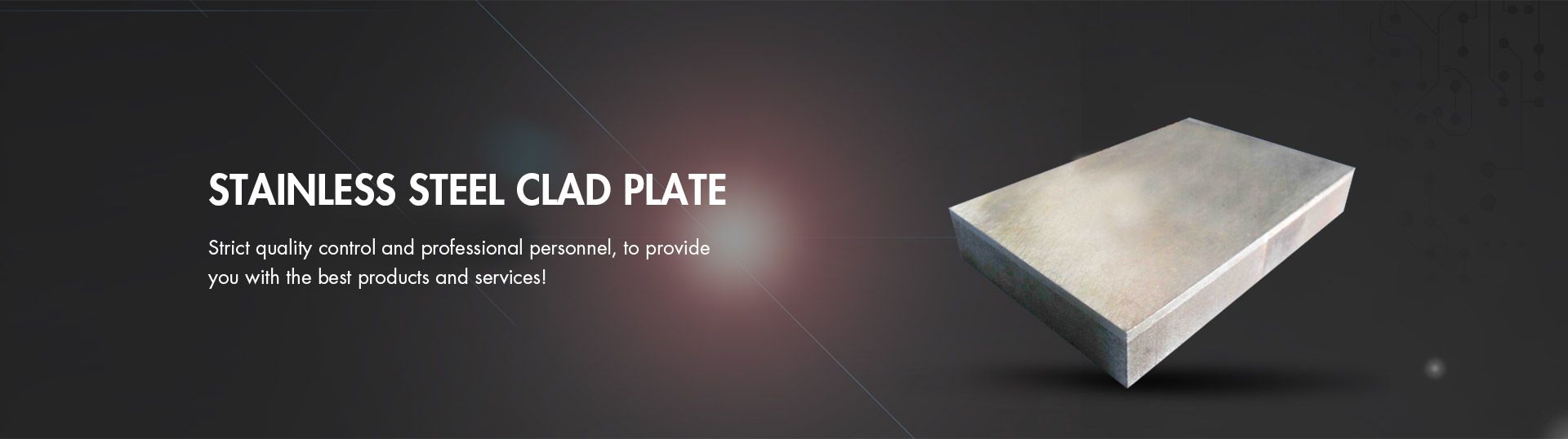
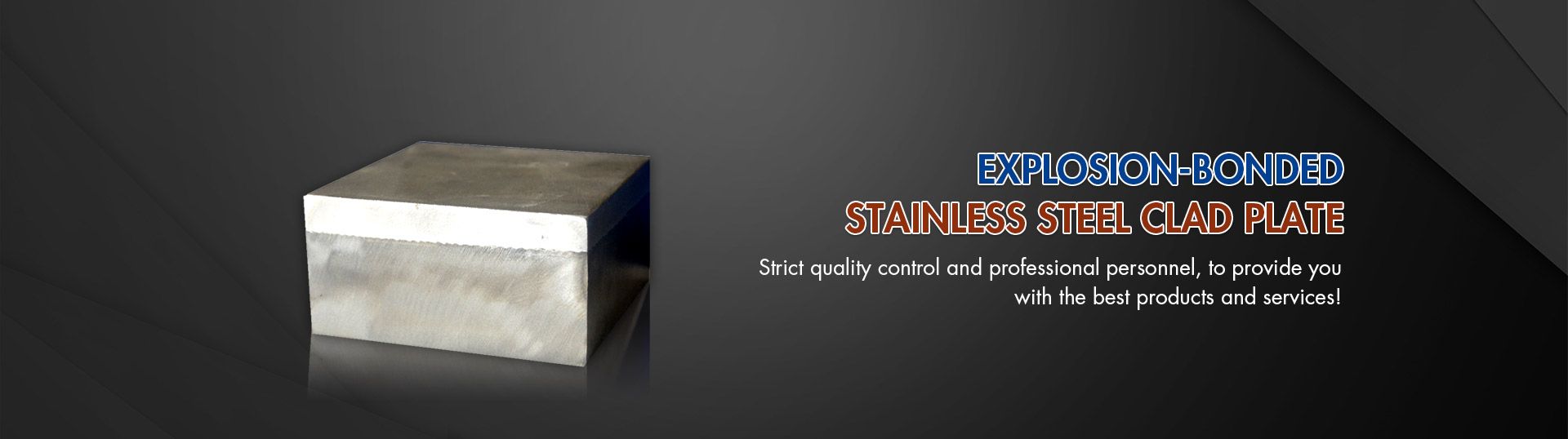
All kinds of ordinary carbon steels and special steels such as Q235B, Q245R and Q345R can be used as the base material of stainless steel clad plate. The cladding materials can be made of various grades of stainless steels, such as 304, 316L, 1Cr13, 321, 310S and duplex stainless steels. The materials and thickness can be freely changed to meet the needs of different users. Stainless steel clad plate is notable not only for its corrosion resistance of stainless steel, but for its good mechanical strength and processability of carbon steel. It is a new industrial product. Stainless steel clad plate has been widely used in petroleum, chemical industry, salt industry, water conservancy and electric power and other industries. It not only reduces the costs of the projects, but also improves the performance of the equipment and prolongs the service life of the equipment.
KLS supplies stainless steel clad plates and clad heads for chemical equipment manufacturers, EPC contractors and fabricators. Materials can be specified for reactors, process vessels, columns and heat exchangers according to the process medium, design conditions, fabrication route and project drawings.
Clad construction combines a corrosion-resistant layer on the process-contact side with a carbon or special steel base that provides structural strength. For chemical equipment, the specification should be based on the actual service environment and fabrication route rather than the equipment name alone.
KLS supplies stainless steel clad plate with project-specific combinations of base material, cladding grade, layer thickness and plate dimensions. Clad heads for pressure vessels are also available for reactor and vessel closure applications.
| Supply Form | Typical Fabrication Use | Information to Define |
|---|---|---|
| Stainless steel clad plate | Shell courses, vessel sections, column shells, flat covers, formed-head blanks and tube-sheet blanks | Base grade, clad grade, base thickness, clad thickness, dimensions, bonding route, surface requirements and inspection criteria |
| Clad head | End closures for reactors, process vessels and pressure equipment | Head profile, diameter, total thickness, minimum clad thickness after forming, trim condition, openings and inspection requirements |
The final equipment designer or fabricator remains responsible for pressure calculations, corrosion assessment, code compliance and approval of the selected material combination.
| Equipment | Typical Clad Plate Location | Main Conditions to Evaluate |
|---|---|---|
| Reactors and agitated vessels | Process-wetted shell, top and bottom heads, covers and selected internal attachment areas | Reactants, catalysts, pressure, operating temperature, thermal cycling, agitation and suspended solids |
| Process and storage vessels | Shell, bottom, roof, heads and liquid-contact surfaces | Liquid zone, vapor zone, condensation, chemical concentration, storage temperature and cleaning procedures |
| Columns and towers | Shell courses, top and bottom heads and process-contact sections | Temperature gradient, vapor and liquid composition, condensation, pressure or vacuum and shutdown cycles |
| Shell-and-tube heat exchangers | Channel, bonnet, shell sections, covers and tube-sheet facing or blanks | Media on both sides, temperature difference, crevice conditions, tube-to-tube-sheet joining and cleaning chemicals |
| Condensers, evaporators and reboilers | Shell, channel, covers, heads and tube-sheet areas | Phase change, deposits, thermal cycling, concentration changes and localized corrosion risk |
The clad layer is normally positioned on the process-wetted side. The required orientation must be marked clearly on drawings, especially for plates that will later be rolled or formed.
A chemical name alone is not sufficient for selecting the cladding grade. The following operating information should be provided before the material combination and clad thickness are finalized.
| Project Data | What to Confirm | Why It Matters |
|---|---|---|
| Process medium | All chemicals that contact the surface during normal operation, start-up, shutdown and cleaning | A grade compatible with the primary product may not resist cleaning chemicals or temporary process conditions |
| Concentration | Normal range, maximum concentration and possible concentration caused by evaporation | Corrosion behavior can change significantly as concentration changes |
| Impurities | Chlorides, sulfur compounds, dissolved oxygen, moisture and other contaminants | Small amounts of impurities can affect pitting, crevice corrosion or stress-corrosion risk |
| Temperature | Normal, minimum, maximum and design temperature | Corrosion resistance, strength and fabrication requirements depend on temperature |
| Pressure | Operating pressure, design pressure and vacuum conditions | Determines the structural duty and required base-material thickness |
| Thermal cycles | Heating and cooling frequency, start-stop cycles and temperature ramp | Influences expansion differences, weld design and post-fabrication treatment |
| Solids and flow | Particle type, solids content, fluid velocity and agitation | Abrasion or erosion-corrosion may influence the grade and corrosion allowance |
| Cleaning method | CIP chemicals, solvents, steam-out, mechanical cleaning or pickling | Cleaning conditions may be more aggressive than normal service |
| Design code | Applicable vessel, project or customer specification | Controls permissible grades, testing, welding and documentation requirements |
If different media contact opposite sides of a heat exchanger or tube sheet, process data for both sides should be submitted.
Stainless steel clad plate is the primary material option for this application. The clad layer provides the required process-side surface, while the base material is selected for structural duty, pressure, temperature, toughness and fabrication.
KLS can provide cladding materials including 304, 316L, 1Cr13, 321, 310S and duplex stainless steels. These grades should be treated as available specification options rather than automatic selections.
| Cladding Option | When It May Be Evaluated | Items That Must Be Verified |
|---|---|---|
| 304 | Chemical service in which existing corrosion data confirms compatibility | Medium concentration, chloride level, operating temperature and cleaning chemicals |
| 316L | Applications requiring a molybdenum-bearing austenitic stainless steel | Pitting and crevice conditions, acid concentration, temperature and weld exposure |
| 321 or 310S | Elevated-temperature or repeated thermal-exposure applications | Process compatibility, design temperature, forming route and heat-treatment cycle |
| 1Cr13 | Projects specifically designed around a martensitic stainless cladding grade | Required corrosion resistance, weldability, hardness and fabrication procedure |
| Duplex stainless steel | Applications requiring a combination of strength and resistance to localized corrosion | Chloride concentration, temperature, forming, welding heat input and phase-balance requirements |
Final grade selection should be approved using service-specific corrosion data, the applicable design code and the equipment designer’s material specification.
Available base-material options include Q235B, Q245R and Q345R. The permitted grade must be confirmed against the equipment drawing and governing code.
Base-material selection is mainly determined by:
Design pressure and design temperature
Required strength and impact toughness
Total calculated wall thickness
Welding and forming requirements
Post-weld heat-treatment requirements
Equipment code and project specification
The corrosion-resistant cladding should not automatically be treated as part of the pressure-bearing thickness. Whether it can be included in the strength calculation is determined by the equipment designer under the applicable code.
The base thickness is established through the structural or pressure design. The clad thickness should be specified separately and should account for:
◆ Required corrosion allowance
◆ Minimum remaining thickness after forming
◆ Local thinning at heads or heavily formed sections
◆ Machining of tube-sheet faces or sealing surfaces
◆ Edge preparation and clad removal around weld joints
◆ Surface finishing and post-fabrication cleaning
◆ Expected inspection and maintenance requirements
Both the ordered clad thickness and the required minimum thickness after fabrication should be stated on the drawing.
Roll bonding and explosion bonding may be considered according to the material combination, layer thicknesses, plate dimensions and subsequent fabrication route. Forming temperature, rolling direction, welding and post-weld heat treatment should be reviewed before the bonding route is finalized.
When service data indicates that stainless steel may not provide the required corrosion resistance, KLS can review Hastelloy clad plate, nickel clad plate or titanium clad steel plate as separate material options.
These alloys are not direct substitutes for one another. A complete review of the medium, concentration, impurities, temperature, pressure, cleaning chemicals and fabrication route is required before quotation.
Send your material specification to KLS. We will review the requested material combination, supply form, fabrication conditions and inspection requirements before preparing the quotation.
Contact KLS for a project-specific quotation.

Coke Drum

Huge Pressure Vessel

Heat Exchanger

Huge Pressure Vessel

Pressure Vessel

Pressure Vessel

Reactor

Tank Car

Vertical Pressure Vessel